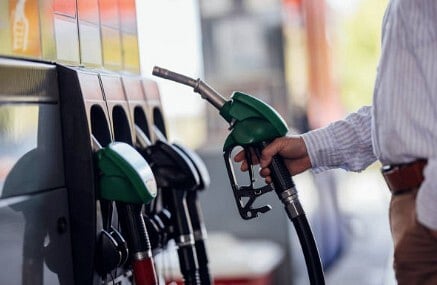
Someone said to us recently that the current global fuel situation feels a bit like COVID all over again, especially if you’re running a business.
When you stop and think about it, that comparison really does land.
It brings back memories of that constant uncertainty — wondering what was coming next, how it would impact your back pocket, and whether your business would be able to ride it out. At the time, most of us were making decisions with incomplete information, reacting as things unfolded rather than getting ahead of them.
But while there are similarities, there is also one very important difference this time.
We’ve been here before.
This Time, We Have the Advantage of Experience
Unlike during COVID, where everything felt unprecedented, we now have the benefit of hindsight. We understand what it feels like to operate in an uncertain environment, and more importantly, we’ve learned some hard lessons about what works — and what doesn’t.
Right now, there are already signals emerging that shouldn’t be ignored. The Official Cash Rate (OCR) is sitting at 2.25%, but there is increasing speculation that rises could come earlier than the December timing currently forecast. If that happens, it will flow through quickly to borrowing costs, customer spending, and overall business confidence.
None of this is happening in isolation either. Rising fuel costs, inflationary pressure, and global instability are all feeding into the same environment, which means the impact on businesses could be both broad and sustained.
The Temptation to Wait
In times like this, it’s completely natural to want to wait for more certainty before making any big decisions. Many business owners take a “let’s see how this plays out” approach, hoping things might settle or become clearer soon.
The challenge with that approach is that it often reduces your ability to respond effectively later.
One of the biggest lessons from COVID was that the businesses who acted early — even when things felt unclear — generally had more options available to them. They were able to adjust gradually, rather than being forced into sharper, more reactive decisions under pressure.
A More Deliberate Way Forward
What we’re encouraging businesses to do now is not to panic, but to be proactive.
This is about taking a more deliberate and controlled approach, rather than waiting for external pressures to force your hand. Acting early doesn’t mean overcorrecting — it means creating space to make thoughtful, well-informed decisions while you still can.
The OptiFi Way
At OptiFi, we keep coming back to a simple principle:
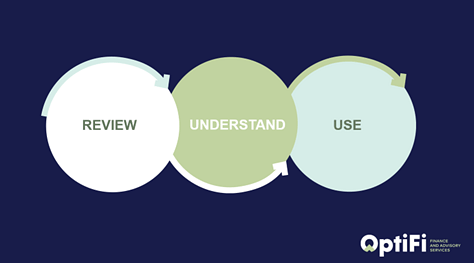
This is particularly important in an environment where the full inflationary impact is still unknown, the timing of OCR changes is uncertain, and global conditions remain volatile.
When things feel unclear externally, clarity internally becomes even more valuable.
What That Looks Like in Practice
For most businesses, this doesn’t require a complete overhaul. Instead, it’s about getting closer to the fundamentals and making sure you have a clear understanding of where you stand.
That might mean taking a deeper look at your cashflow, testing how your business performs under different cost scenarios, or revisiting your pricing and margin assumptions. It could also involve identifying areas where you can build flexibility now, rather than trying to find it later under pressure.
These are not necessarily big, dramatic moves — but they are important ones.
Final Thoughts
We can’t control where fuel prices go, and we don’t get to decide when interest rates change. What we can control is how prepared we are to respond.
The difference this time is that we don’t have to go in blind. We’ve seen what uncertainty looks like, and we know the cost of waiting too long to act.
The businesses that come through this period strongest are unlikely to be the ones who sat back and hoped for clarity. They’ll be the ones who leaned in early, asked the right questions, and made decisions while they still had options.
Contact us now to discuss how we can help you and your business.