Key Takeaways from the Waikato Business Summit
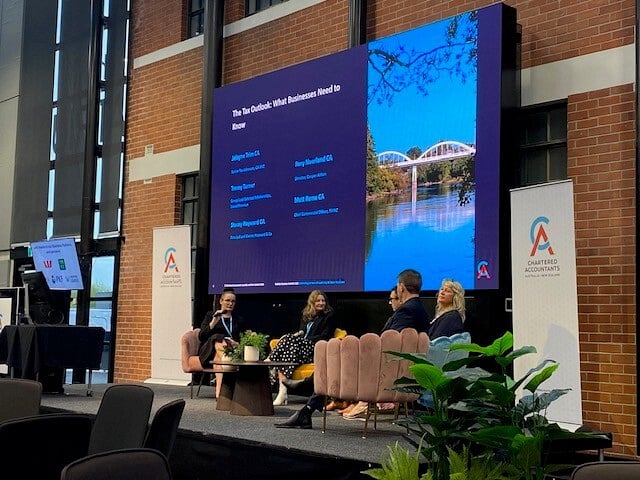
Dave and Rae recently attended the Waikato Business Summit, where the theme was Building Future Readiness. As in previous years, it was a day packed with insight, fresh perspectives and practical learnings that offered excellent value for businesses looking to navigate an evolving economic and business environment.
From changing how we attract and develop talent to understanding the economic recovery underway in New Zealand, there was plenty to reflect on. Here are some of our key takeaways.
1. Rethinking how we engage the next generation
Gen Z can sometimes be perceived as lazy, entitled or difficult to engage. However, it is worth remembering that our parents and grandparents had similar views of younger generations back in the 1970s and 1980s!
Rather than expecting Gen Z to adapt to the way we have always done things, we need to meet them where they are. That might mean asking a candidate to submit a three-minute selfie video instead of a traditional application letter, or rethinking how we communicate, recruit and develop young talent.
Gen Z has also grown up in a digital world, with access to technology and AI in ways that many of us did not. Instead of seeing this as a challenge, businesses should recognise it as an opportunity to bring new skills, perspectives and capabilities into their teams.
The takeaway: Future-ready businesses are willing to challenge traditional approaches and adapt to attract, engage and develop the people they need.
2. Confidence, preparation and letting go of the outcome
Olympic pole vaulter Eliza McCartney shared a valuable perspective on confidence and success: both come from being prepared while learning to let go of our attachment to the outcome.
In business, we spend considerable time planning, setting targets and working towards specific results. While these activities are important, we cannot control every variable or guarantee the outcome we want.
What we can control is the quality of our preparation, the effort we put in and how we respond when things do not go to plan.
For business owners and leaders, this is a useful reminder. Build the capability, do the groundwork and make informed decisions, but remain flexible enough to adapt when circumstances change.
The takeaway: Focus on what you can influence. Preparation builds confidence, while flexibility helps you navigate uncertainty.
3. The New Zealand economic recovery is underway
The Westpac economic update, presented by Darren Gibb, offered an encouraging message: while it might not always feel like it, a recovery is taking place in New Zealand.
Retail spending, employment growth and house prices are stronger in the South Island, with data also indicating improvement across the North Island.
The primary sector is performing well, with positive conditions supporting confidence and investment. Dairy farmers are spending on equipment, while beef and lamb prices continue to rise.
There are also encouraging signs for the housing market. Average mortgage interest rates remain around 160–200 basis points below their COVID-era peaks, and housing affordability has improved to levels not seen for approximately 10–12 years.
Of course, a recovering economy does not mean every business or household is feeling the benefits equally. The pace of recovery will vary across industries, regions and individual businesses.
The takeaway: There are reasons for cautious optimism. Business owners should look beyond the headlines, understand what is happening in their own sector and be ready to respond as confidence and activity improve.
4. AI should build capability, not undermine it
Artificial intelligence was an overarching theme throughout the Summit, with discussions focusing on how businesses are using AI and what this means for their people and their future.
One particularly important message was that AI should help people grow their capacity to understand, decide, do and experience. It should enhance human capability rather than simply replace human effort.
This is especially relevant when considering junior roles and the future workforce. If businesses use AI to eliminate entry-level positions without thinking about the longer-term implications, they risk eroding the talent pipeline that develops future managers, specialists and leaders.
Junior employees need opportunities to learn, practice, make decisions and build experience. AI can support that development, but it should not remove the learning opportunities altogether.
For SMEs, the opportunity is to use AI thoughtfully: automate repetitive tasks, improve access to information, support better decision-making and free up people to focus on higher-value work. At the same time, businesses need to invest in the skills and experience their people will need in an AI-enabled workplace.
The takeaway: AI is a tool to help people do more and become more capable. The real opportunity lies in combining technology with human judgement, experience and development.
What does this mean for New Zealand businesses?
The Waikato Business Summit reinforced an important message: building future readiness is not about predicting the future perfectly. It is about building a business that can adapt, respond and take advantage of opportunities as they emerge.
For New Zealand SMEs, that means focusing on a few practical priorities:
Understand your numbers. Monitor cash flow, margins, costs and financial performance so you can make informed decisions about investment and growth.
Stay close to your customers and market. Economic recovery creates opportunities, but understanding where demand is growing—and where it remains subdued—is essential.
Invest in your people. Review how you recruit, communicate and develop employees. Challenge assumptions about different generations and create opportunities for people to build skills.
Use technology deliberately. Identify where AI and automation can improve productivity, while protecting the development of future talent and maintaining appropriate human oversight.
Prepare, but stay flexible. Set clear priorities and make plans, while recognising that the ability to adapt is just as important as the plan itself.
At OptiFi Business Solutions, we believe that a future-ready business starts with understanding where you are today, identifying where you want to go and making deliberate decisions about how to get there.
You do not need to have every answer or invest in every new technology. You do need a clear view of your business, the confidence to challenge the status quo and the willingness to act when opportunities arise.
The question is not whether your business will face change. It is whether you are building the capability to respond to it.
If you would like to understand how financially and operationally ready your business is for the future, Dave and Rae at OptiFi Business Solutions can help you review your current position, identify opportunities and develop a practical plan for what comes next.